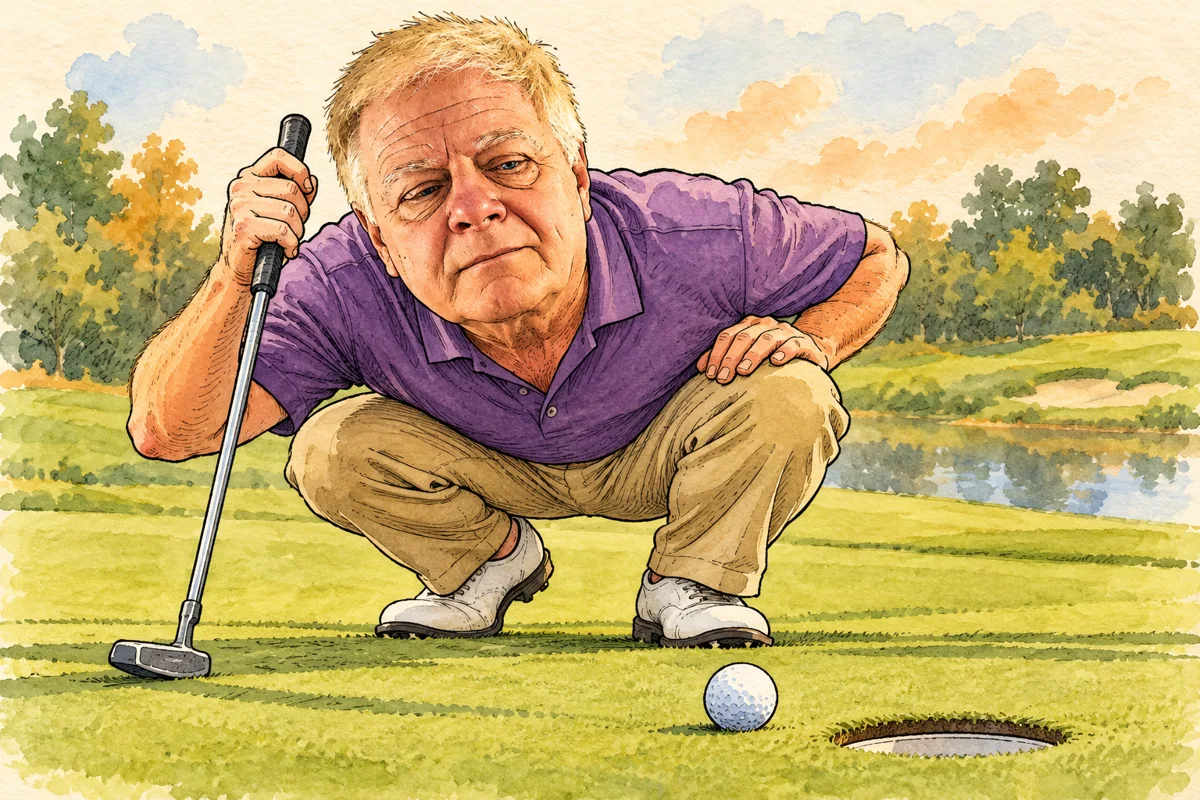
Picture me standing over a nine-foot putt.
I’ve examined the slope. Checked the grain. Walked around the hole like I’m considering buying the property.
The putt misses.
Naturally, I begin questioning my grip, my equipment, and several decisions dating back to childhood.
Then I discover something comforting: the PGA TOUR’s published stats list Max Homa making 50% of his nine-foot putts. Half. A coin toss. And from five feet, his listed success rate is about 80%—meaning roughly one in five still refuses to cooperate.[1]
This changes everything.
I haven’t been missing easy putts. I’ve been participating in a respected professional tradition.
Granted, Max makes the other ones. Let’s not spoil the moment.
On the next hole, I miss the green and give myself the usual lecture: You really should be better at this by now.
But Tommy Fleetwood’s published greens-in-regulation figure is about 67%. That means even Tommy misses roughly one-third of his greens—equivalent to about six in an 18-hole round. “In regulation” means reaching the putting surface with two strokes left for par.[2]
Six missed greens.
And here I am acting personally betrayed because my seven-iron didn’t deliver the ball to the flag with a handwritten note.
Of course, Tommy’s miss might leave a manageable chip. Mine sometimes requires a discussion about property boundaries. But we’ve both missed the green, and I would appreciate some consistency in how we report these things.
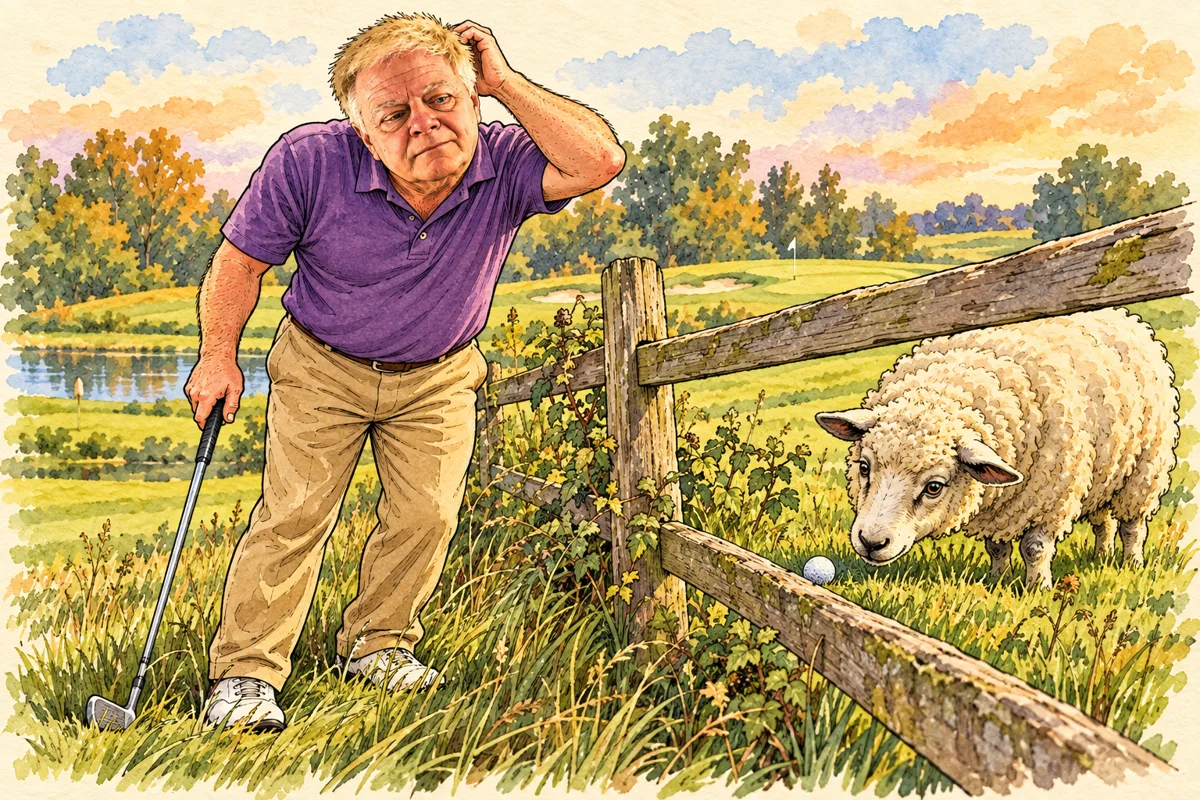
Then comes the little approach shot.
You know the one. Close enough that you’ve already imagined the birdie before you’ve selected a club.
Patrick Cantlay’s published average proximity from 100–125 yards is 17 feet, 8 inches. That is the average distance remaining to the hole—not a tap-in, and certainly not something my friends would concede, even after lunch.[3]
Meanwhile, I finish twenty feet away and look disappointed.
Who exactly do I think I am?
Apparently, a man who practises occasionally but expects better results than someone whose occupation is golf.
Watching highlights hasn’t helped. We see a wedge finish beside the cup, then a long putt drop, then another spectacular approach. My brain stitches these together into one imaginary golfer who never makes a mistake.
Then I go play golf with my actual body.
There are differences.
The professionals remain ridiculously good. They recover from mistakes better, repeat good shots more often, and play demanding courses under pressure.
But their statistics have given me permission to enjoy my own round a little more.
Miss a putt? It happens.
Miss a green? Even Tommy.
Leave a wedge twenty feet away? Perhaps hold off on the disciplinary hearing.
I’ll keep working on my swing. But I’m also going to work on being someone I’d actually enjoy spending four hours with.
The pros get paid to play golf.
I pay to play golf.
I should probably stop treating mine like a job I’m about to be fired from.
— Gray
A NOTE FROM THE SCOREKEEPER
Statistics are examples from published PGA TOUR player profiles consulted for the original story on October 4, 2026, rather than career averages. The profiles are live and may now show different figures; the season associated with these retrieved figures was not confirmed. The emotional damage is entirely amateur.
- Max Homa — PGA TOUR statistics: 50.00% from nine feet; 79.78% from five feet.
- Tommy Fleetwood — PGA TOUR statistics: 66.97% greens in regulation.
- Patrick Cantlay — PGA TOUR statistics: 17′ 8″ proximity from 100–125 yards.
Original AI-generated editorial cartoons. The illustrated golfer is based on a personal reference photograph.